Tuesday 13th and Thursday 15th January 2026 morning – split activities part 1:
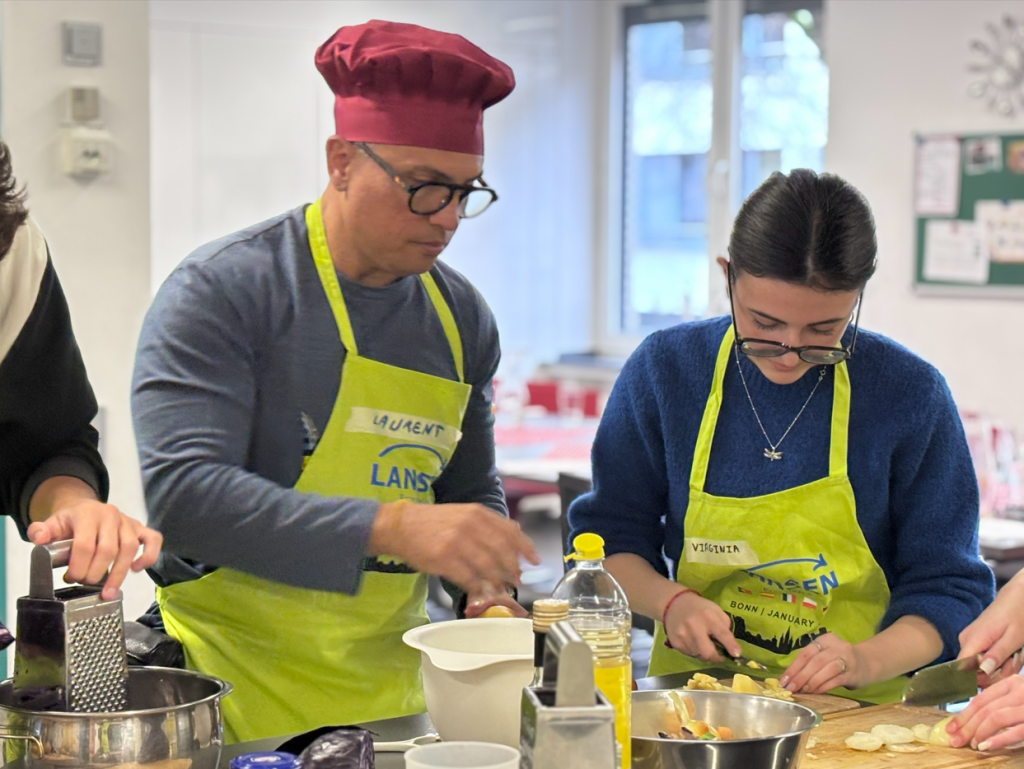
Cooking workshop
The Tuesday and Thursday morning programme focussed on work in a smaller group
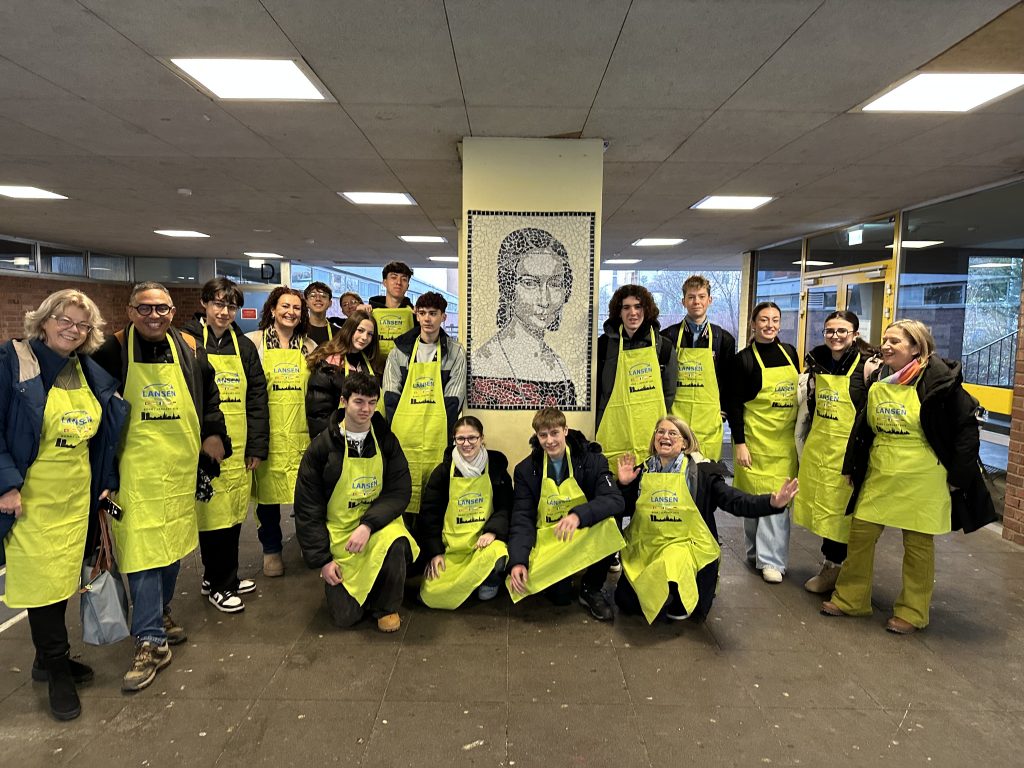
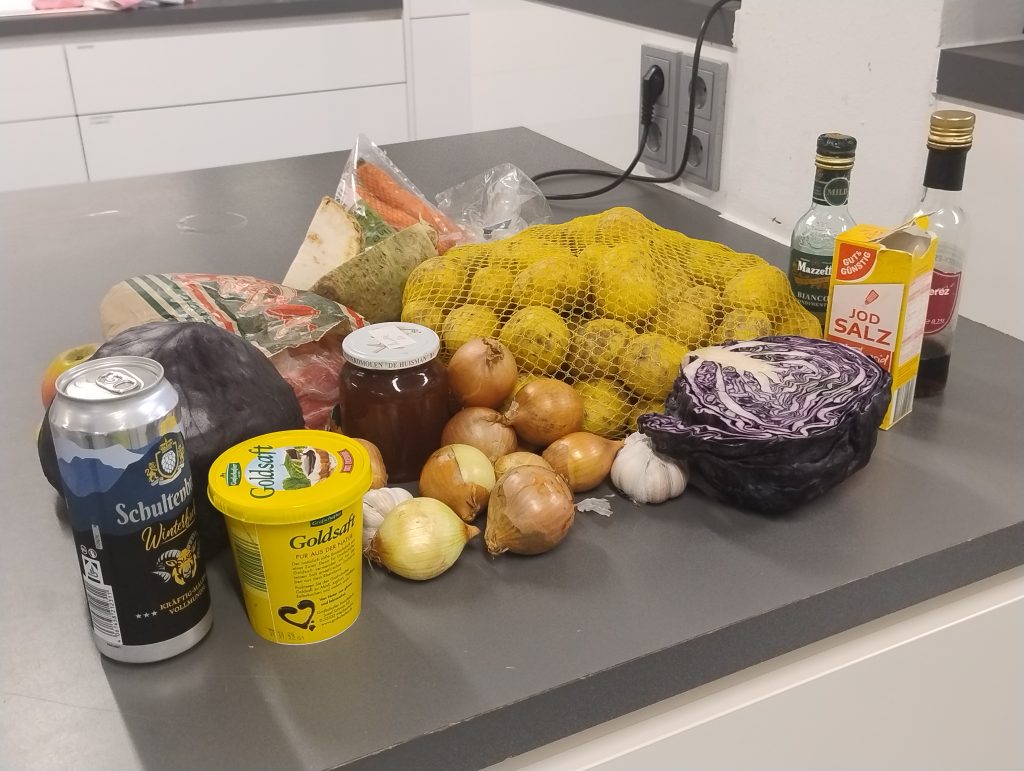
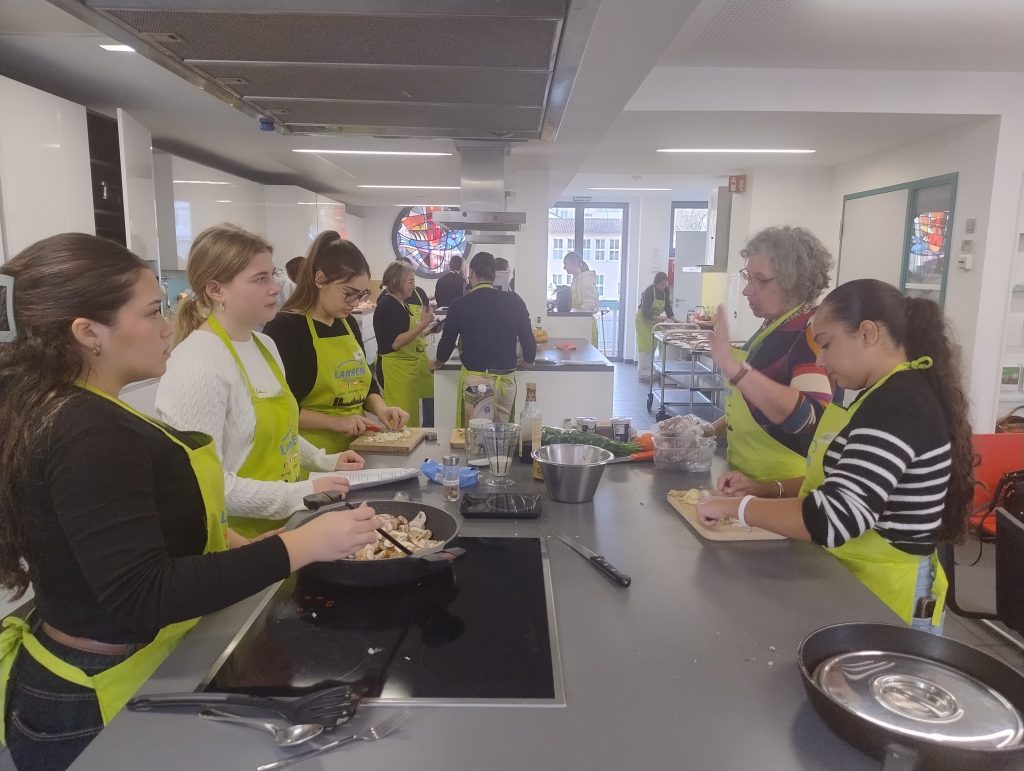
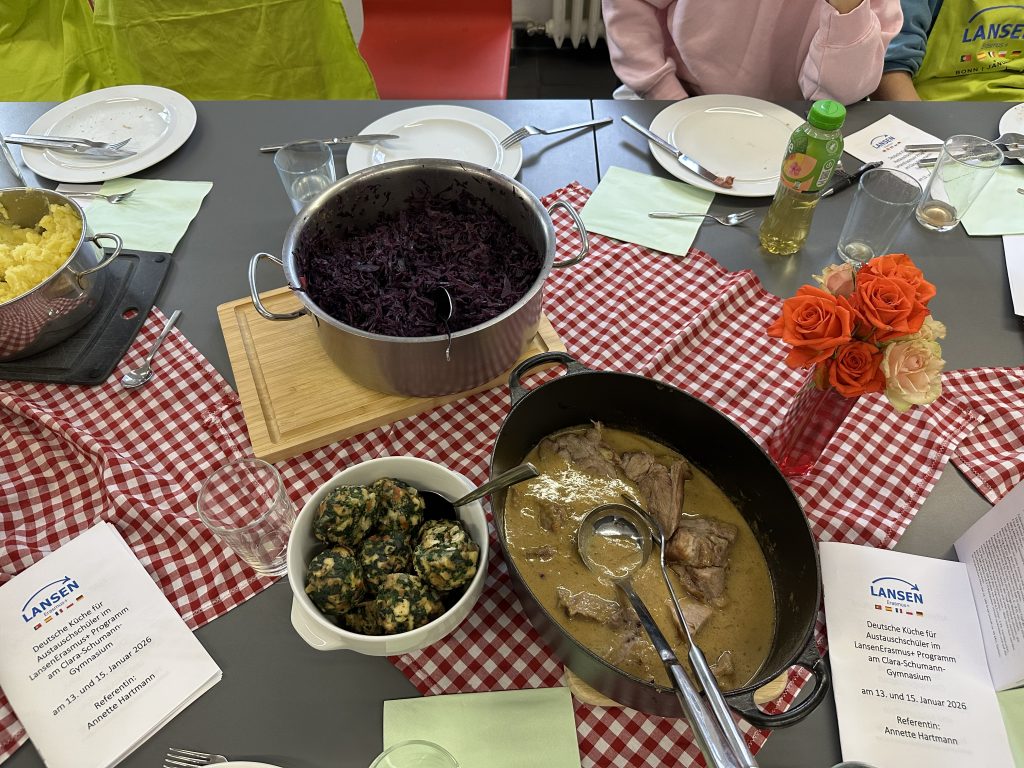
Group A went to the cooking class, making a full German Sunday meal themselves, using food, spices and tastes that some of the group have never heard of or experienced themselves. Every international team had to prepare, cook and serve parts of the meal. In the end all the group enjoyed lunch together at a long table, exchanging their experience.
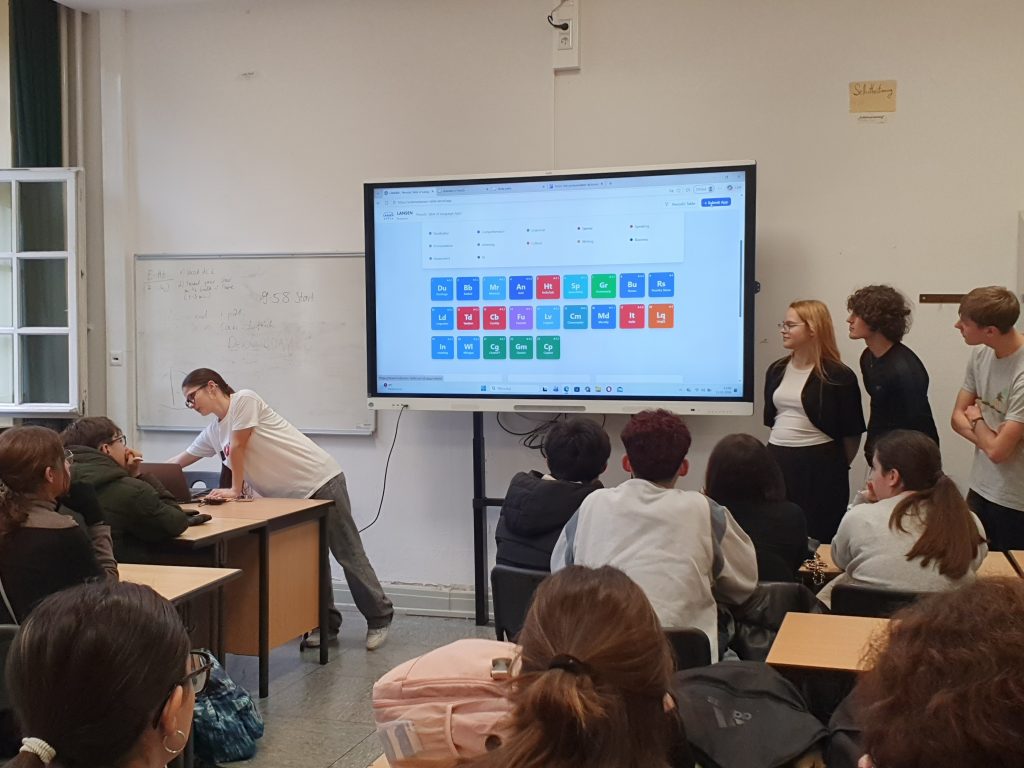
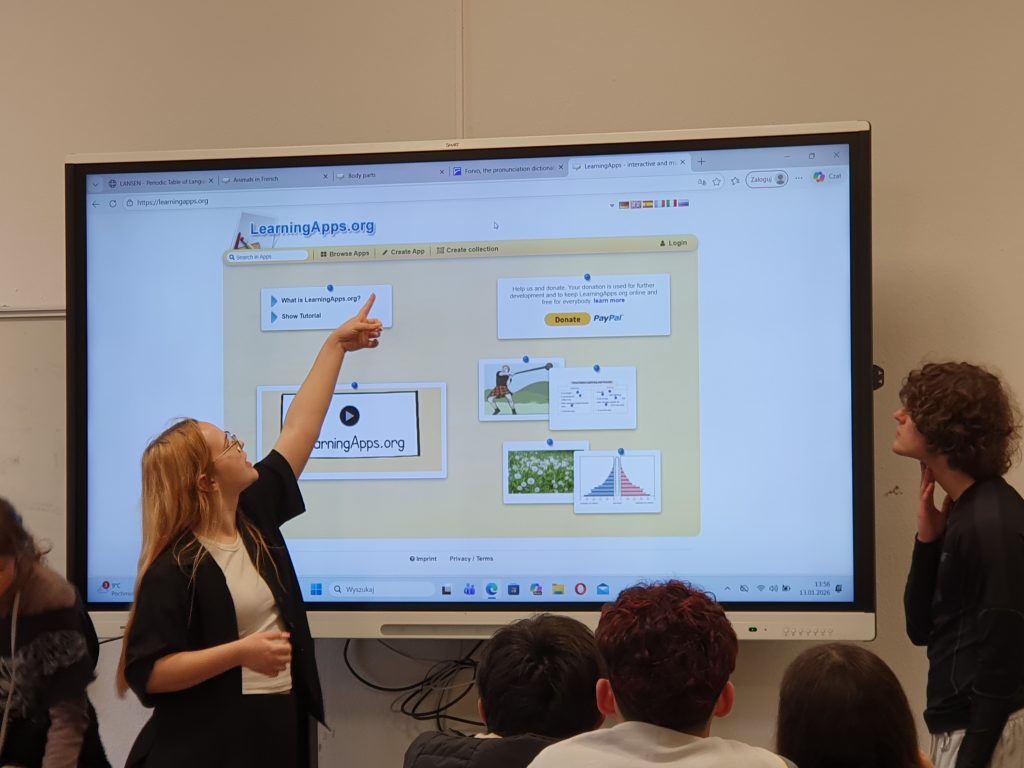
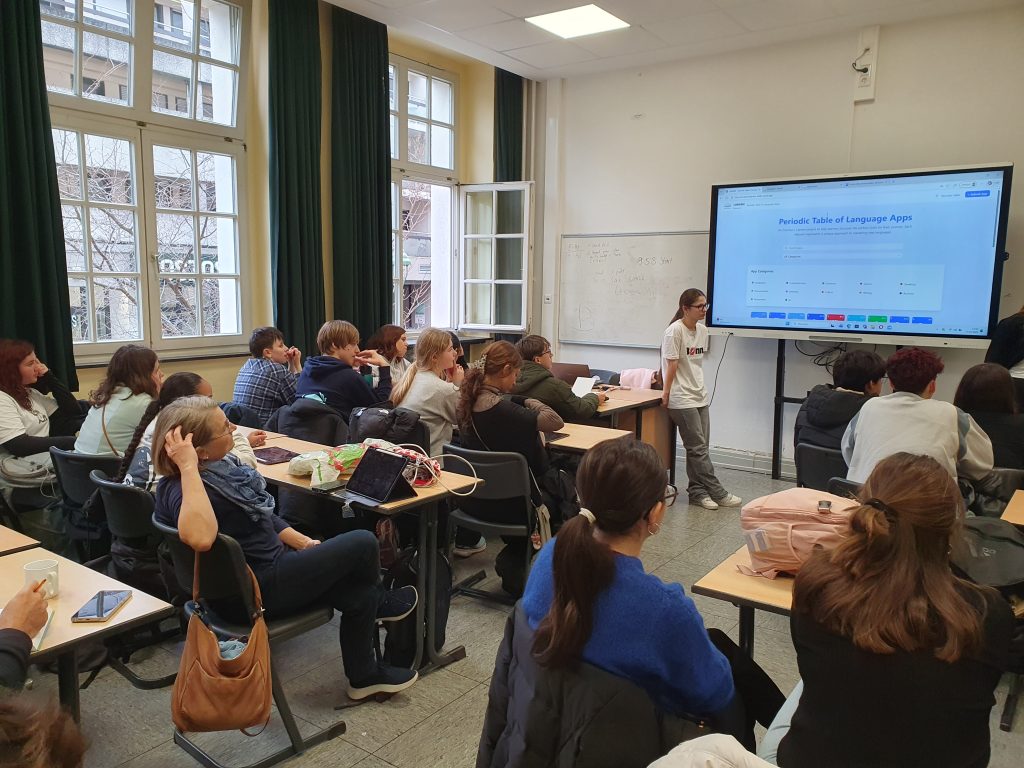
Tuesday afternoon all the participants met to get more information on the “periodic table of apps” (Polish team), e-twinning (French team) and the Little-Prince-Workshop (Spanish team) until everybody enjoyed getting home before dark.
Tuesday 13th and Thursday 15th January 2026 – morning: split activities part 2:
Sensory outdoor experience
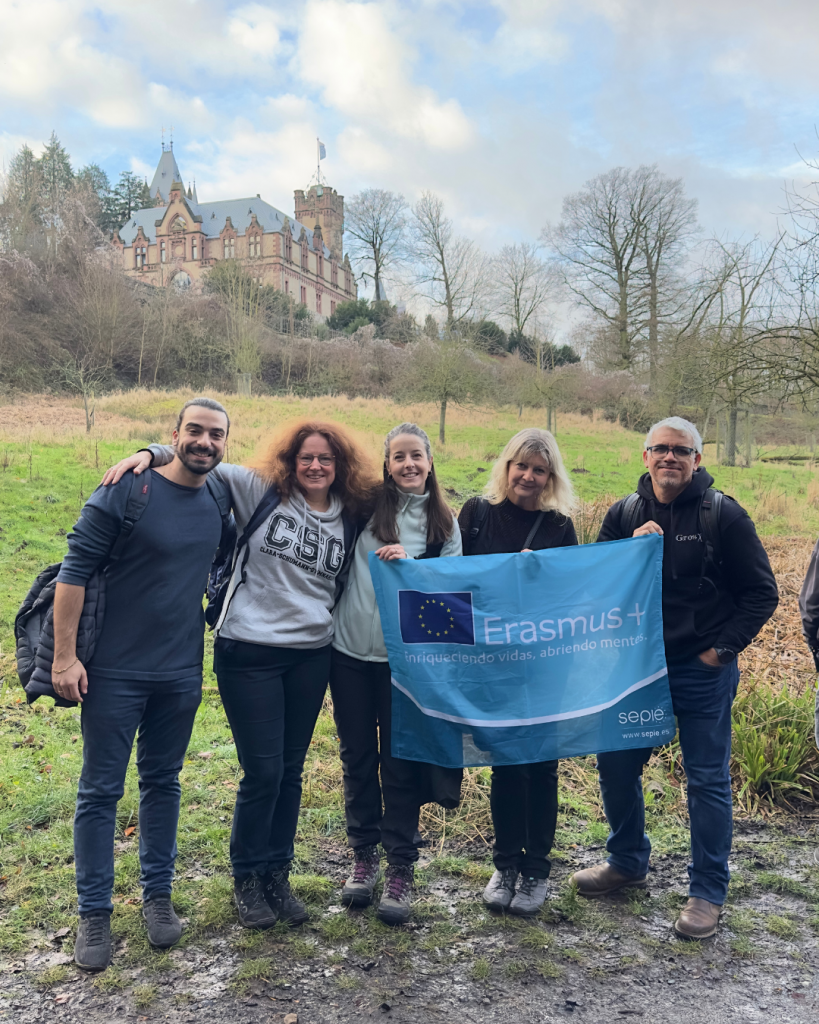
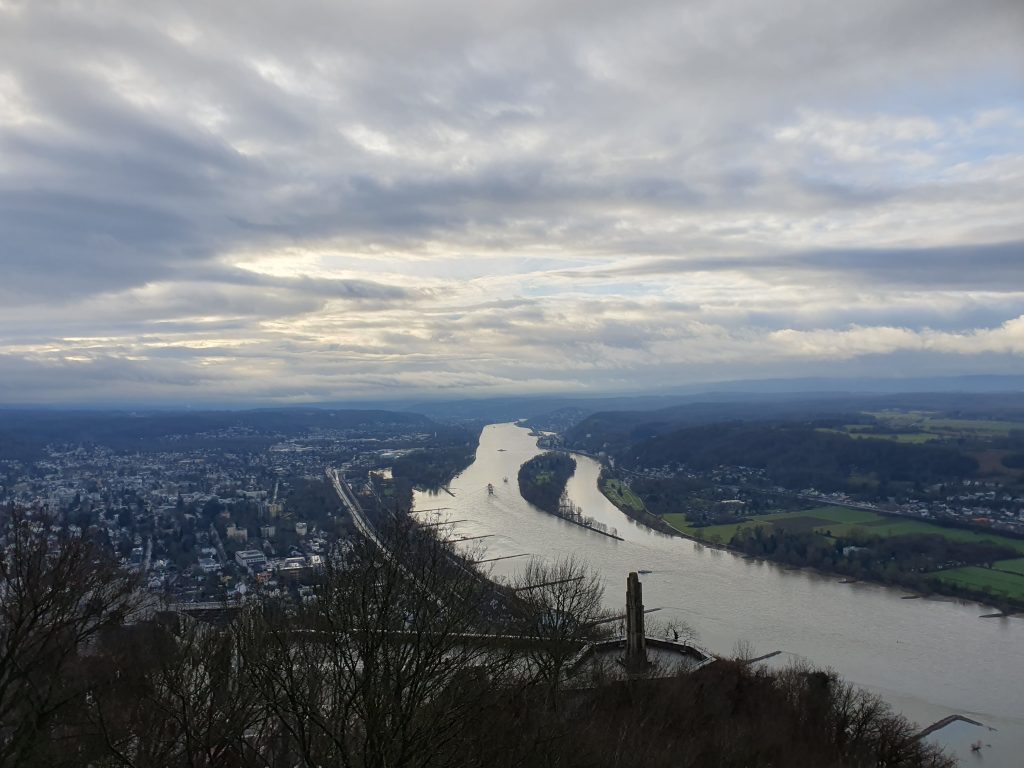
In the morning the “outdoor group” took the tram to Königswinter, the place where the first chancellor, Konrad Adenauer, lived and died. Königswinter features several attractions – one of them is the “Dragon’s Rock” – an ancient castle in ruins on top of an old volcanic plug. So the challenge was to walk up from the river to the castle on the top. As the hike goes through woods and meadows you experience the outdoors and you can follow the “volcano trail” with a lot of information on the site.
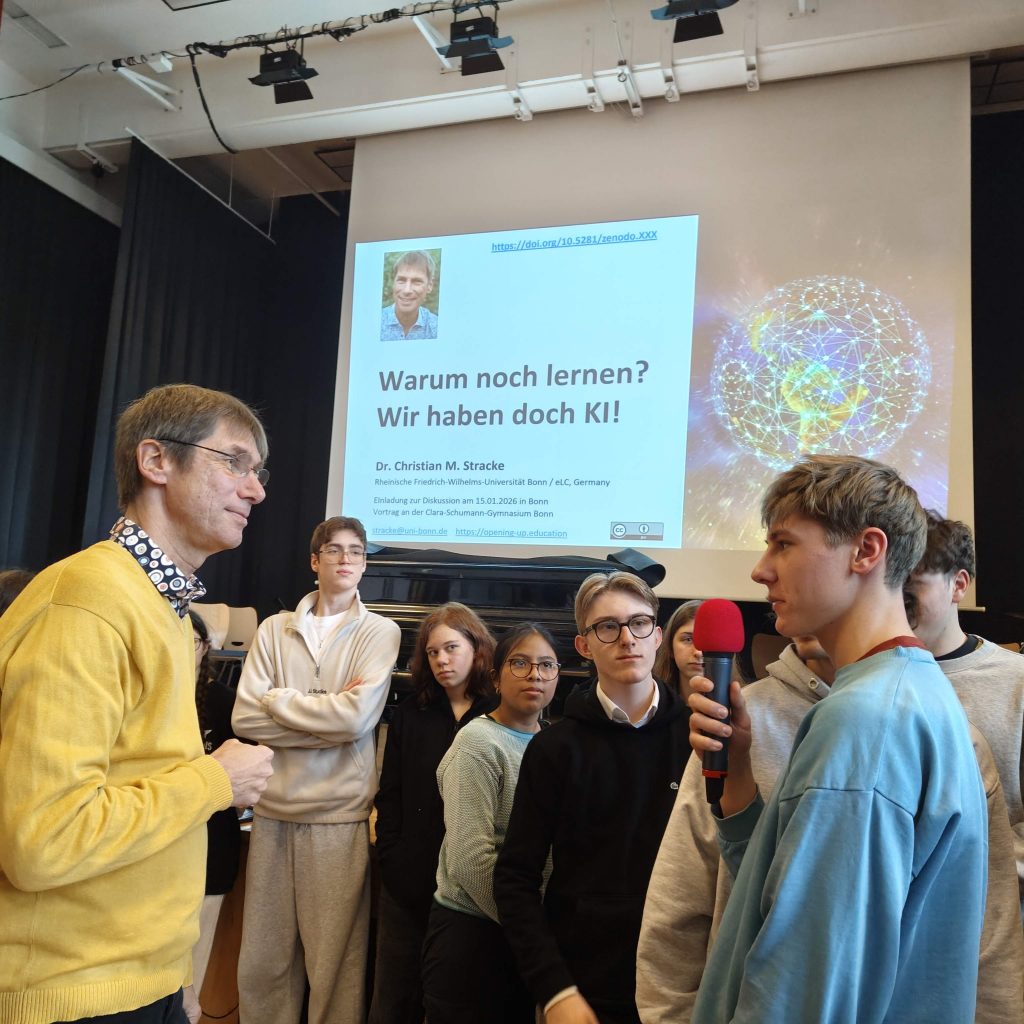
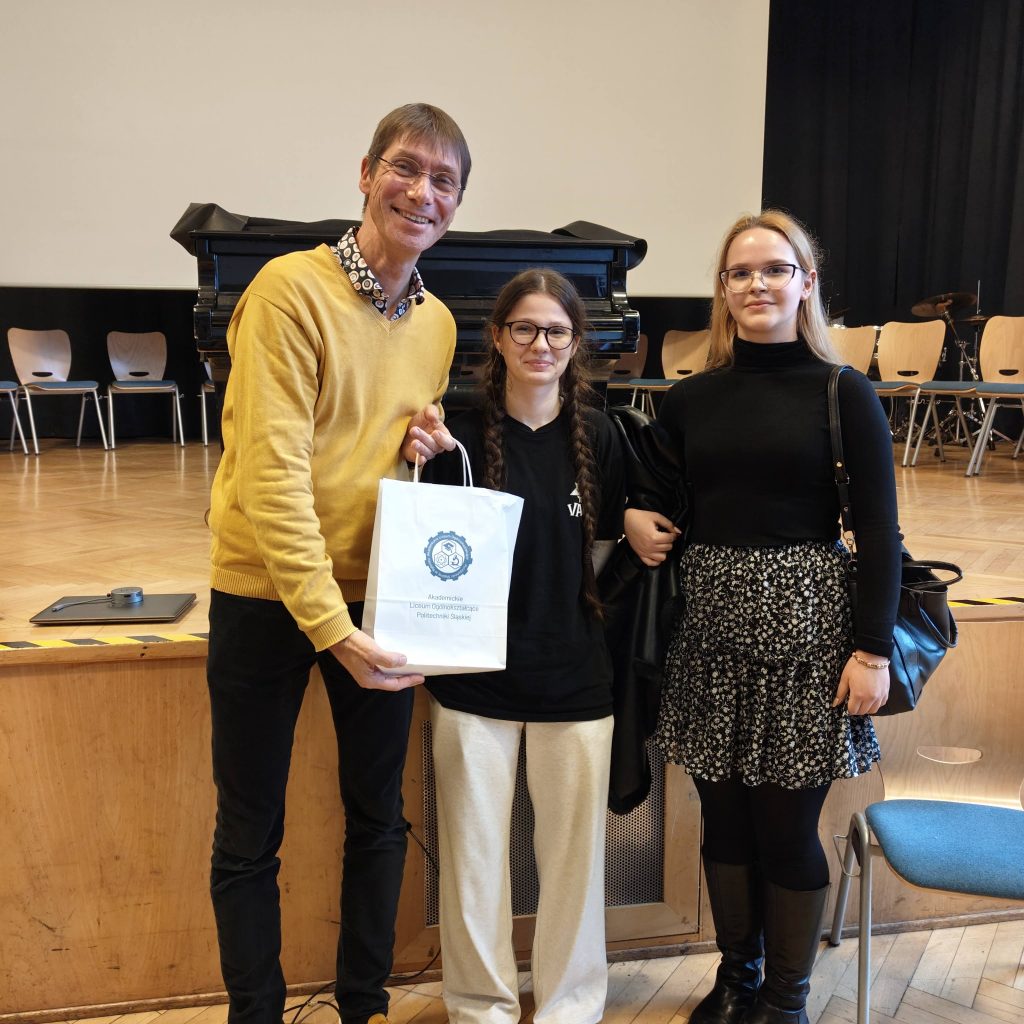
Thursday 15th January 2026 – afternoon activity: lecture by Prof. Christian M. Stracke
In the afternoon, the lecture given by Dr. Stracke, chair in Open Educational Resources, cloud strategies and ethical AI at Bonn University, on “ Why should be bother to learn, if there is AI?”
The lecture focussed on defining what exactly AI can do, how it works and how it can be helpful in learning, but also on the more problematic aspects like the risks coming with overall use of AI in learning, the aspects of ethics, common sense, exams and others.
In the discussion afterwards, students could mouth all their questions and discuss the impact AI has on schools and learning today and in the future, minimizing the risks by regulations and limits.