
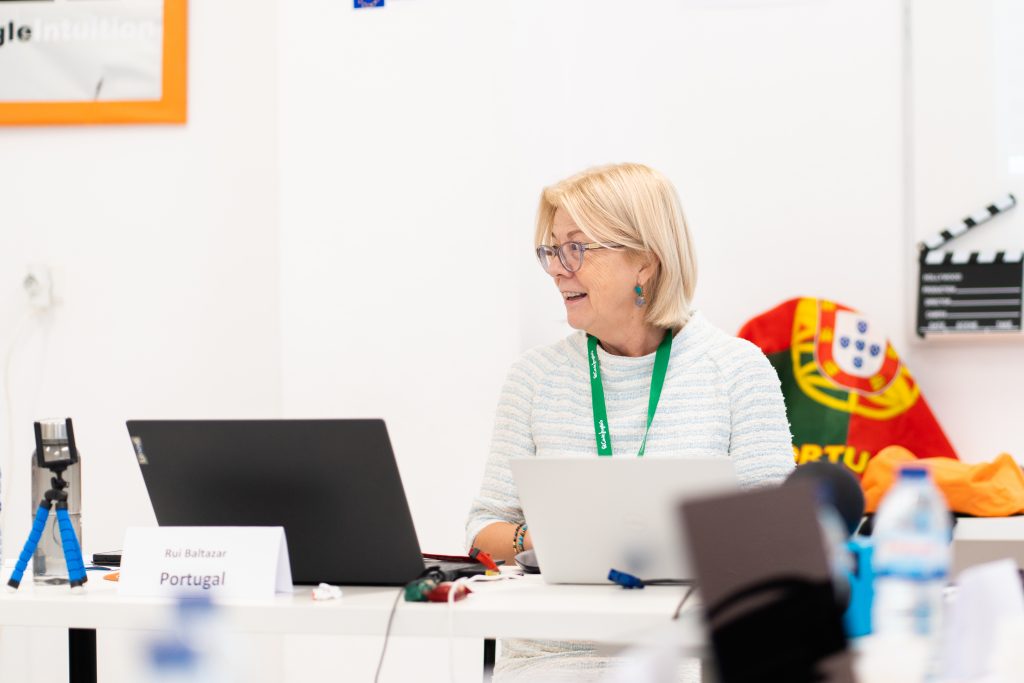
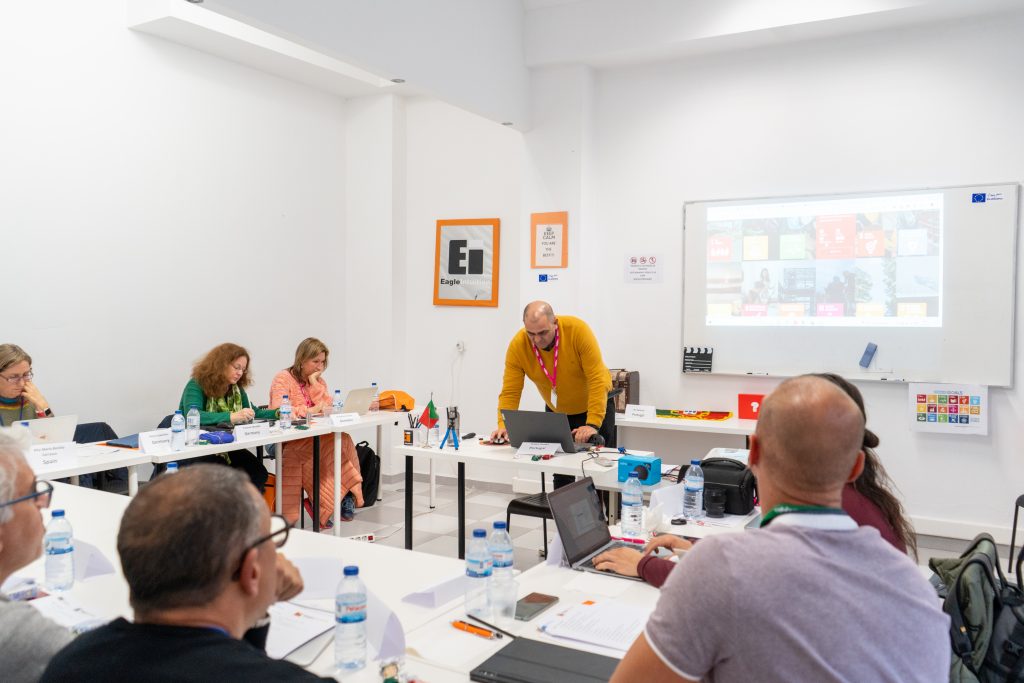
We started the fourth day with an explanation of SELFIE for Teachers by Rui Baltazar. The SELFIE for Teachers session, led by Rui Baltazar (Portugal), introduced participants to this digital self-assessment tool, designed to help educators evaluate and improve their digital competencies. Rui Baltazar explained how SELFIE for Teachers works, highlighting its ability to provide a personalized diagnosis of digital skills in education. The tool helps teachers understand their strengths and areas for improvement, aligning with the European Framework for Digital Competence of Educators (DigCompEdu). All participants were invited to apply the SELFIE tool to assess their own digital proficiency, gaining insights that will support their professional development and the integration of technology in their teaching practices.
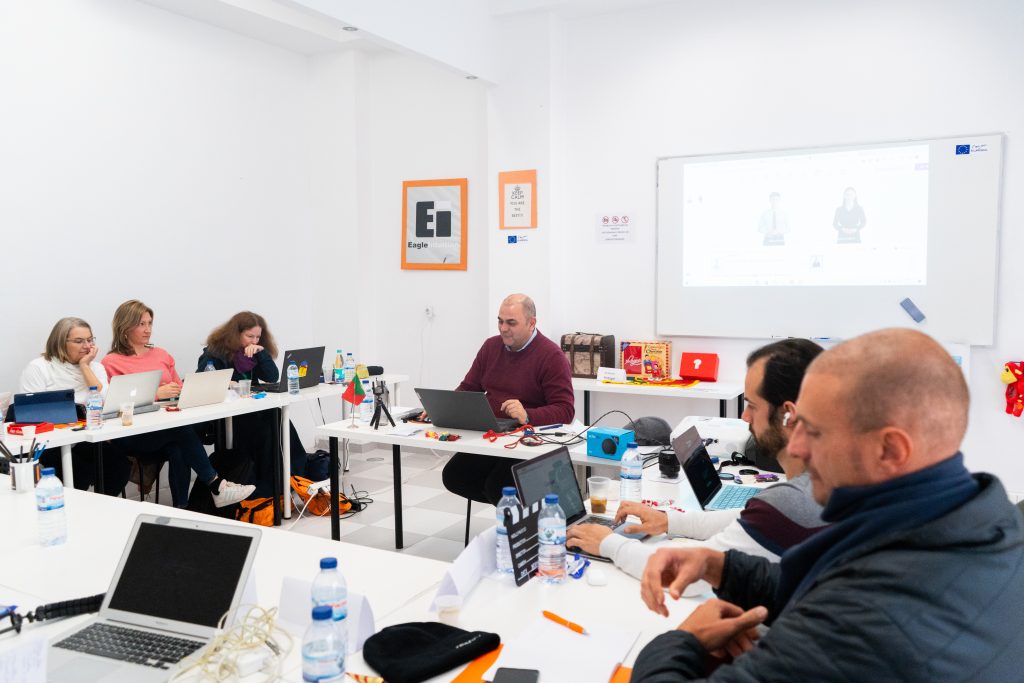
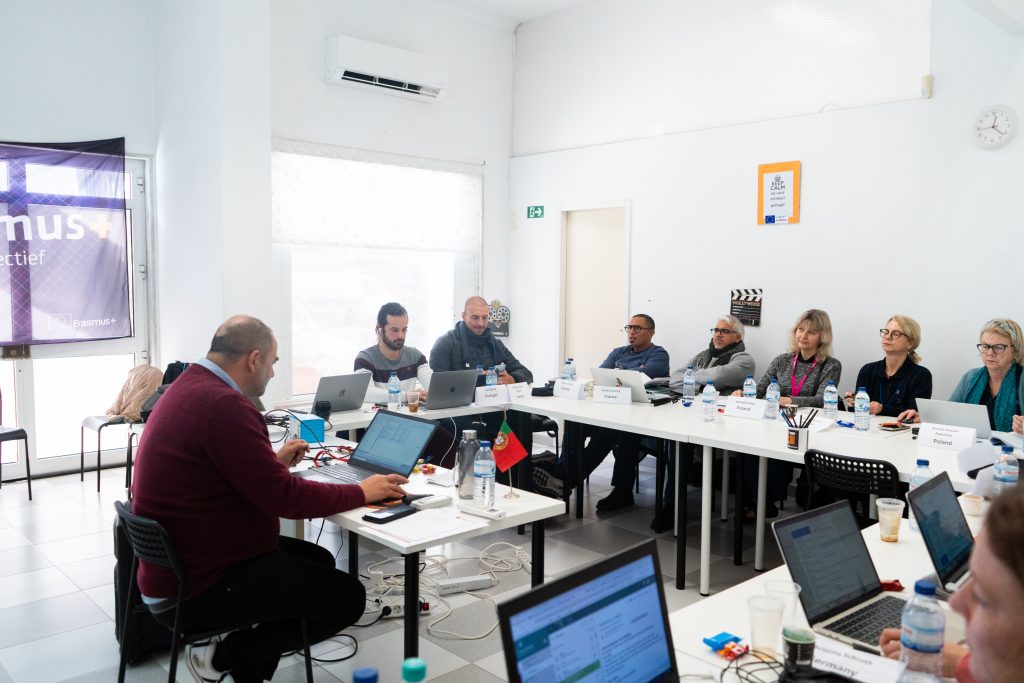
Later on, we had a Presentation on “Creative Commons”. It is was led by the Portuguese team, and introduced participants to the concept of open licensing and how it applies to educational and digital content. The session explained the different types of Creative Commons (CC) licenses, detailing how they allow creators to share, use, and adapt content legally and ethically. Participants learned about the importance of proper attribution, copyright considerations, and best practices for using open resources in educational projects.
This knowledge is particularly relevant for the LANSEN – Learning Languages with Sense project, as it ensures that all materials created and shared comply with ethical and legal standards, promoting collaboration while respecting intellectual property.
Then, The Polish team presented “The Coordinating Brain,” introducing the theme and focus of the upcoming meeting in Poland. During the presentation, they outlined the main objectives and activities planned for the event, giving participants an overview of what to expect. The thematic approach will align with the LANSEN – Learning Languages with Sense project, ensuring continuity and relevance to the project’s goals.
This session allowed for an initial discussion on the upcoming meeting, giving partners the opportunity to provide input and start preparing for their participation. More details and a structured agenda will be shared closer to the event.
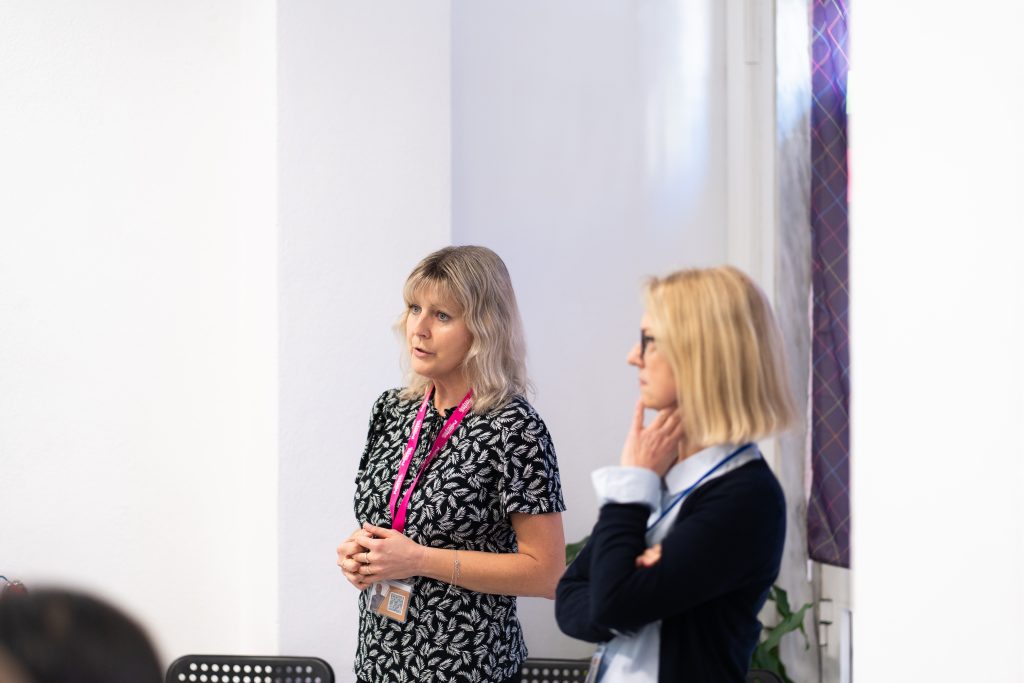
After the Coffee Break, the team had an amazing workshop titled “Artificial Intelligence in the learning of Languages”. It explored how AI technologies can enhance language learning and teaching. The session introduced participants to AI-powered tools such as chatbots, speech recognition systems, translation applications, and adaptive learning platforms. These technologies were demonstrated as effective ways to support language acquisition, providing personalized learning experiences, real-time feedback, and interactive engagement.
The planned cultural visit on “The Tiles in Portugal” had to be canceled due to time constraints. This visit was intended to explore the rich history and artistic significance of Portuguese azulejos (tiles), which are an important part of the country’s cultural and architectural heritage. Although the visit could not take place, participants were encouraged to explore Portugal’s tile art independently, particularly in locations such as the National Tile Museum in Lisbon or through the many tiled facades found in historic buildings and streets. The importance of “azulejos” in Portuguese culture remains a key topic for future discussions and potential activities within the project.
In the evening, the team worked on doubts and difficulties we had found along the week. It was an intense and worthwhile time to improve the main guidelines in the project.